BOUDHANATH
The Eye of the Storm
KATHMANDU: Amidst the honking taxis and the endless rush, there is a circle of white silence watching the world spin.
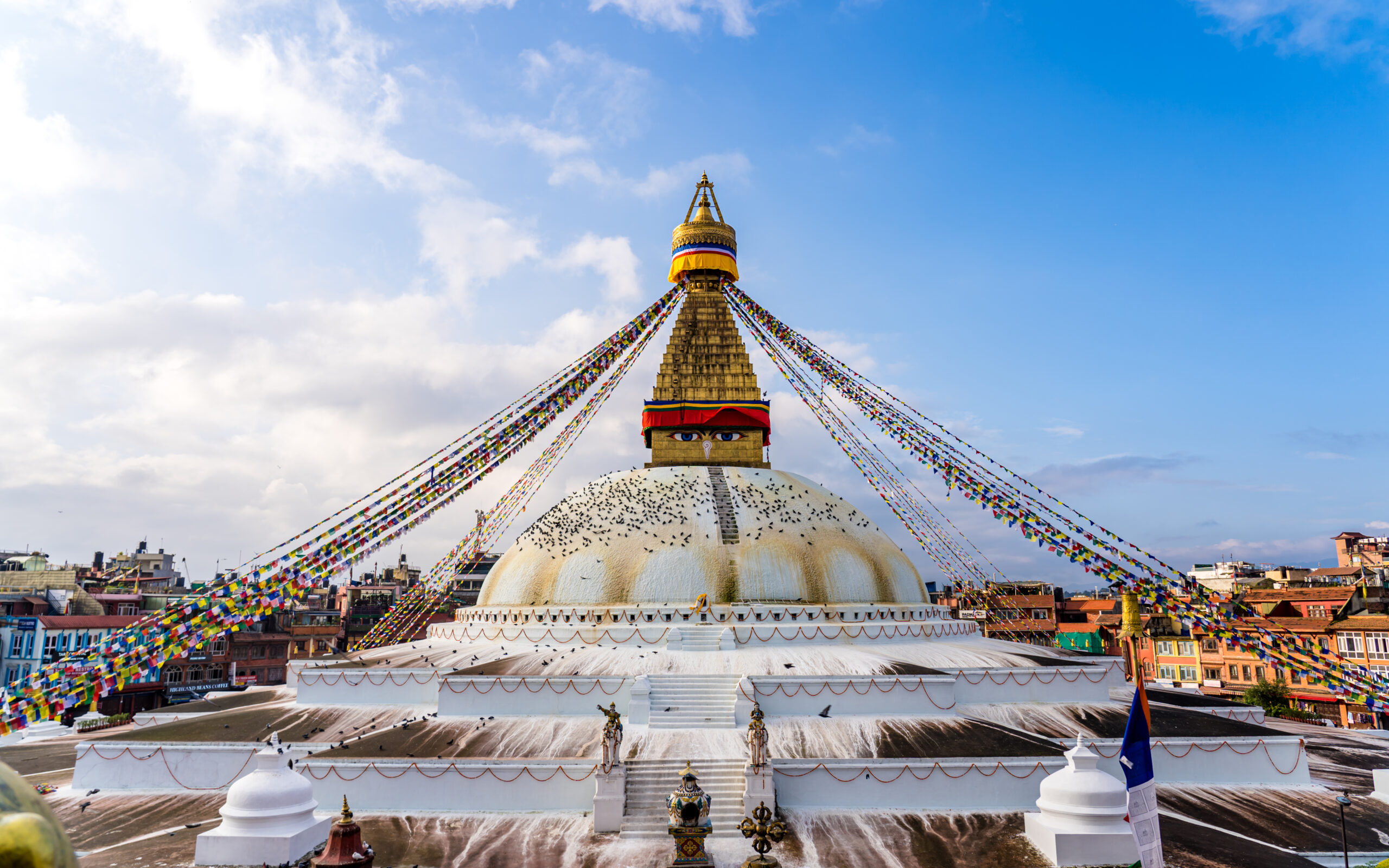
Standing at the center of the Kathmandu Valley, Boudhanath serves as a massive, silent anchor for those navigating the chaos of modern Nepal.
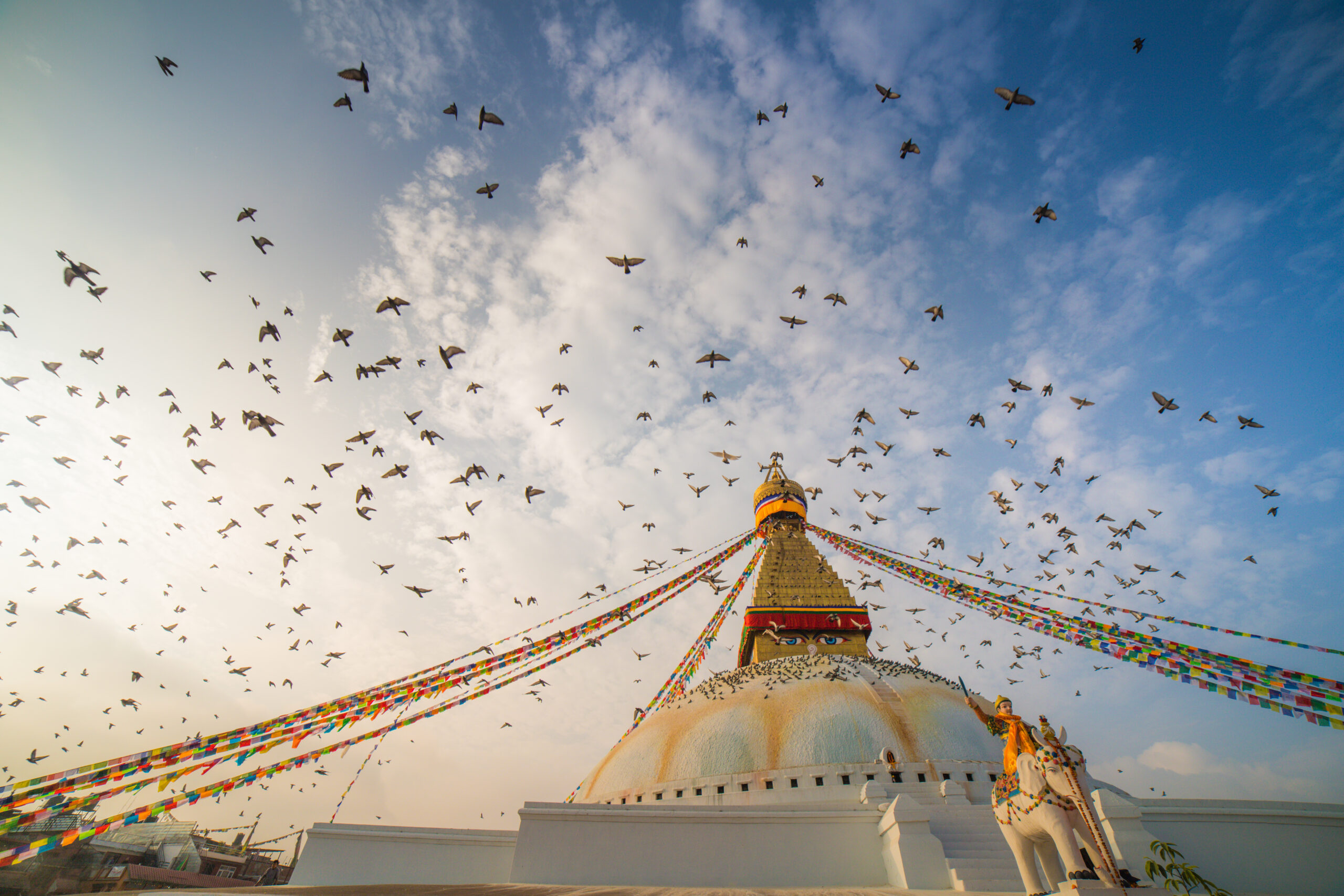
In the middle of the chaos of Kathmandu, amidst the honking taxis, the dust, and the endless rush, there is a circle of silence. It is white. It is massive. And it is watching you: Welcome to Boudhanath Stupa.
But Boudhanath is not just a monument to the past. It is a living, breathing machine for waking up. I traveled here to ask a simple question: In a world that never stops spinning, how do you find the center?
Part 1: What is a Stupa? (A Map of Your Mind)
A stupa is not a building: it is a 3D map of Enlightenment. It is a diagram of the universe, and more importantly, a diagram of you. This architectural lineage traces back to the very first monuments at Sarnath, where the Buddha’s words first set the wheel in motion.
The Five Elements of Awakening
Represents stability and grounding. Before we can fly, we must be able to sit still.
Symbolizes the fluid nature of our potential for awakening.
Symbolizes the burning away of ignorance through compassionate sight.
The ascent toward truth and the shedding of the ego.
The point where the physical world dissolves into pure consciousness.
Part 2: The Dew Drop Persistence
History tells us Boudhanath was built around the 5th Century AD. But the myth speaks of Ma Jhyazima, a poultry keeper who reclaimed her sovereignty by building this structure from dew drops during a devastating drought. To hydrate the clay, workers laid cloths at night to catch the mist, wringing them out drop by drop.
This is a masterclass in Compound Persistence. We often wait for a lightning strike of awakening, but Boudhanath proves that the most massive monuments to peace are built through the accumulation of tiny, consistent efforts. In neurobiology, this is the architecture of a new habit: one firing neuron at a time.
“Kora is the training of the body to align with the center. The stupa is the Truth: the world is the spin.”
Part 3: The All-Seeing Eyes (Witness Consciousness)
The eyes of the stupa, painted in brilliant red, white, and blue, are not looking at you; they are witnessing with you. Between them is the Nepali symbol for the number 1, representing the non-dual nature of reality. In modern psychological terms, this is the Observer State.
When you make eye contact with the spire during Kora, you are practicing a biological reset. By anchoring your vision on the still center while your body moves in a circle, you train your brain to maintain internal equilibrium amidst external volatility. This is why the Tibetan refugees who settled here in 1959 found such resilience; the Stupa was their psychological ground when their physical ground was lost.
The Ritual of Kora
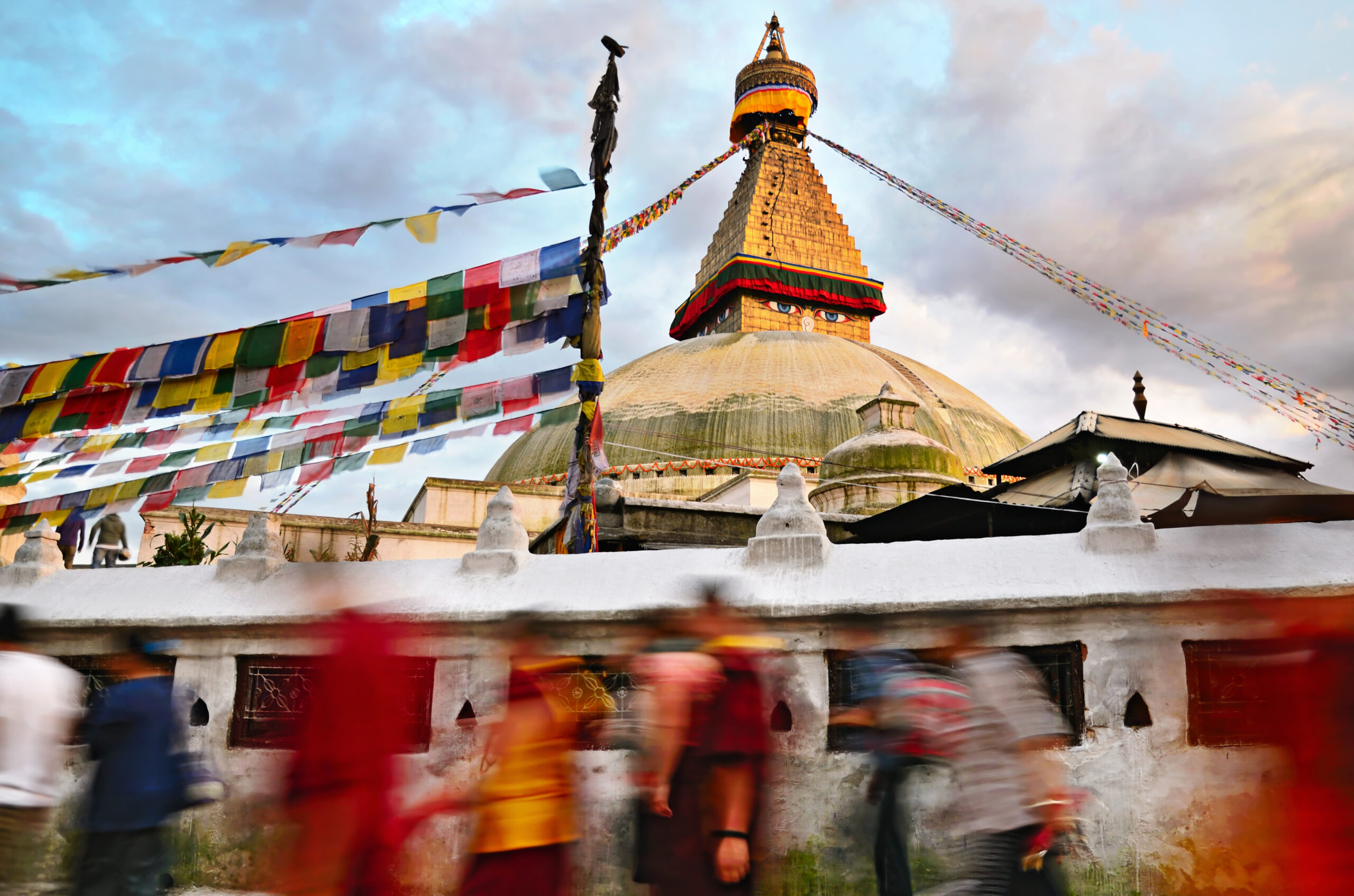
At dawn, thousands walk clockwise. This is physical meditation. You spin the prayer wheels, match your breath to your steps, and remind yourself that the center is always there.
- Anchor: Let the noise of Kathmandu fade into the background.
- Witness: Make eye contact with the spire.
- Circulate: Join the stream of Kora without the urge to arrive.
Practical Guide to the Stupa
Witness the Awakening
The Awakening: A Full Documentary by Afro x Buddha
Deepen the inquiry on the YouTube Channel.