DUNGESHWARI
The Place Where the Buddha Almost Died
DUNGESHWARI: Before the Bodhi Tree, there was the jagged, dry reality of the Mahakala hills.
The Dungeshwari hills are home to a story often overshadowed by the golden light of Enlightenment.
We love the story of the Enlightenment. We love the golden light, the Bodhi Tree, and the peace. But we often skip the chapter that came before it: The chapter of Hell. Before Siddhartha became the Buddha, he was a man at war with his own biology. He believed, like many spiritual seekers today, that the body was the enemy. He thought that if he could just starve the flesh enough, the spirit would break free.
So, he walked 12 kilometers away from the lush forests of Bodh Gaya into the jagged, dry hills of Dungeshwari (also known as the Mahakala Caves). I traveled to this cave to stand in the exact spot where he sat for six years. I wanted to know: What happens when you push the human body to the absolute brink of death in the name of truth?
Part 1: The Landscape of Pain (Pragbodhi)
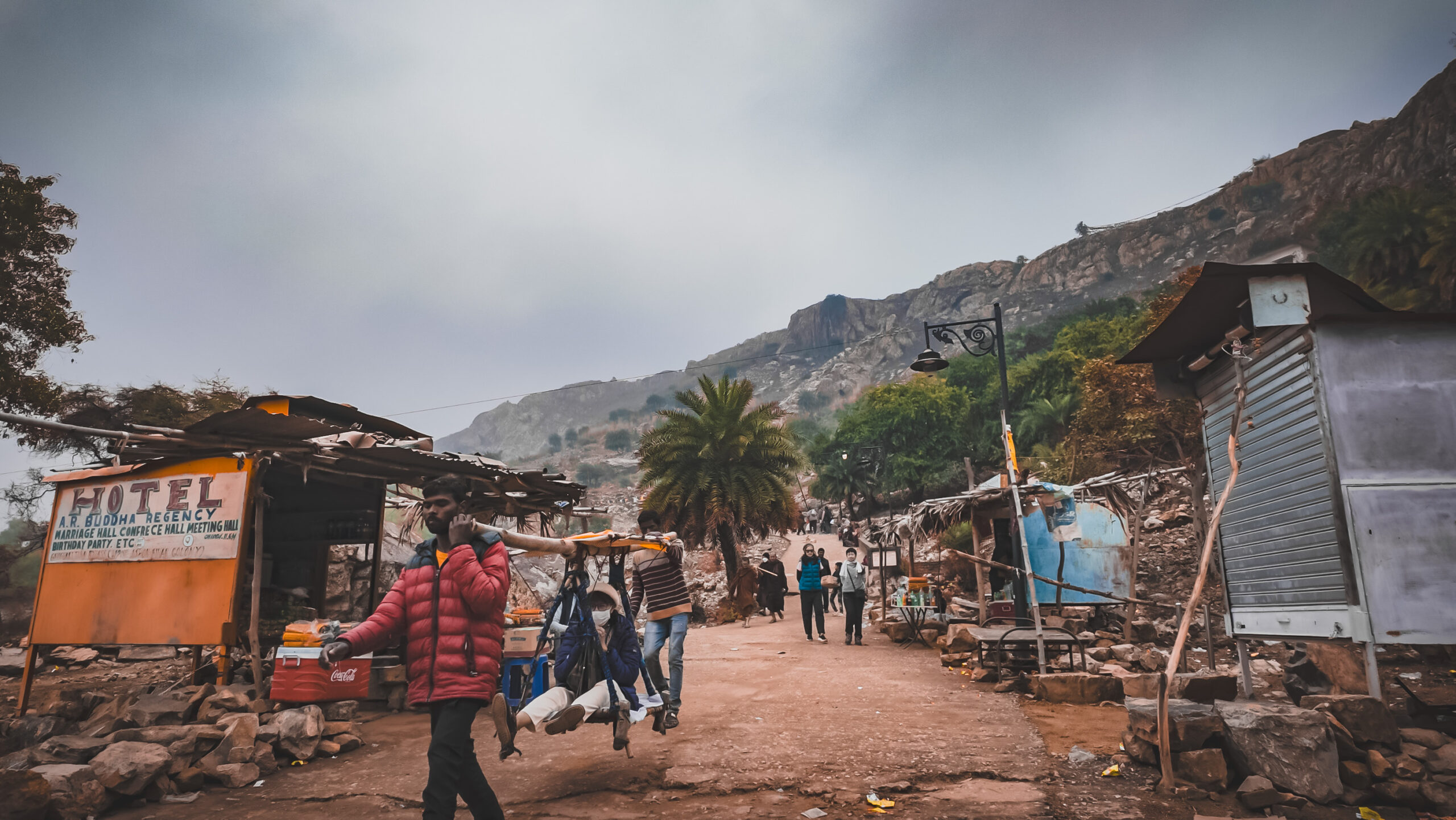
Dungeshwari is not a comfortable place. Even today, the hike up is steep, dusty, and exposed to the brutal Indian sun. The ancient texts call this hill Pragbodhi (Prior to Enlightenment). When you enter the main cave, the air changes: it is cool, damp, and heavy.
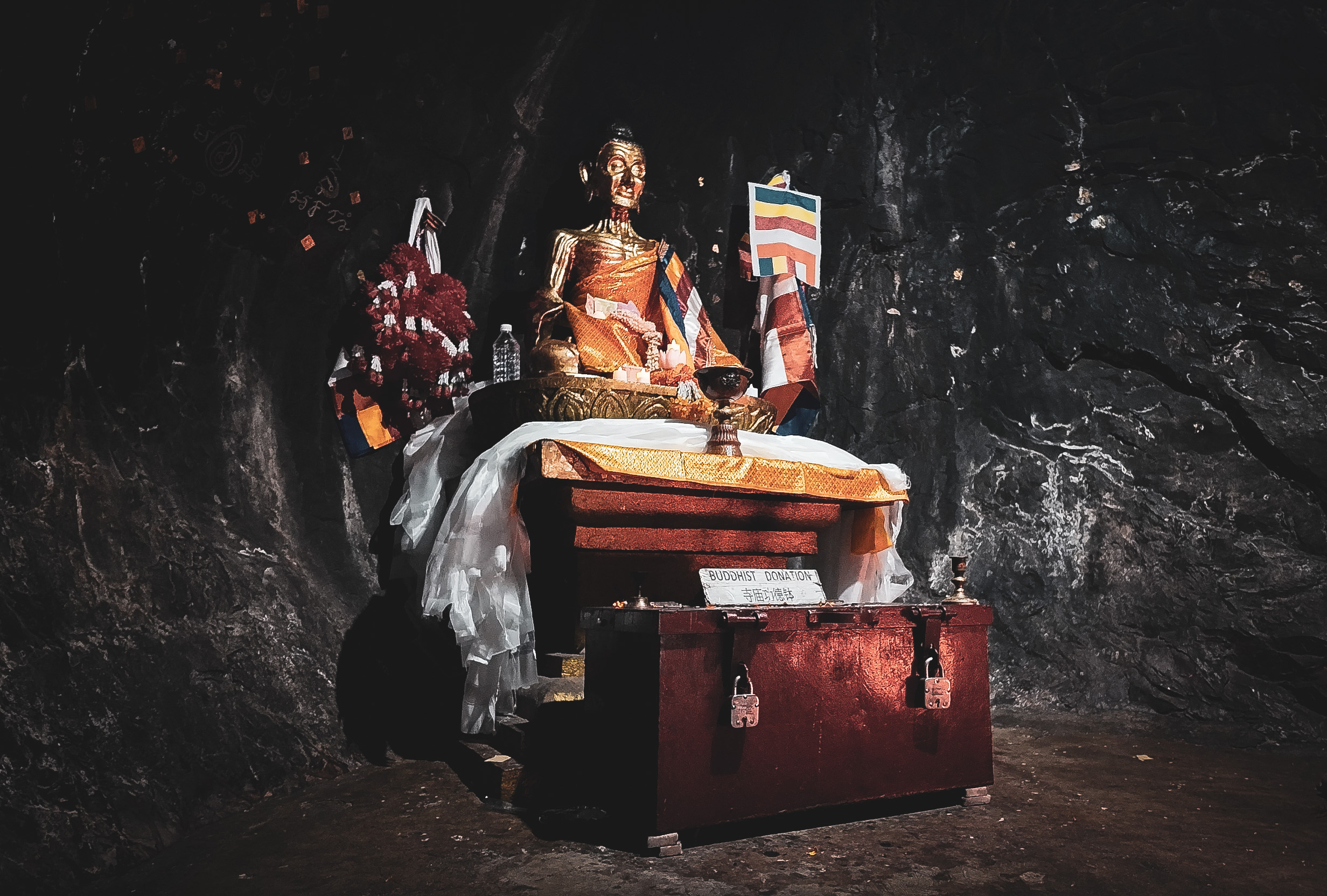
Inside, you will not find the typical “fat, happy” Buddha. You will find the Emaciated Buddha. It is a golden statue that looks more like a skeleton than a man. The ribs are protruding. The stomach is sunken in so deep it touches the spine. The eyes are hollow. This statue freezes a specific moment in time: The moment Siddhartha Gautama was one breath away from death.
“A dead instrument plays no music. If the string of the sitar is too tight, it snaps.”
Part 2: The War on the Body (Austerities)
For six years, Siddhartha and five other ascetics turned this cave into a torture chamber. They were not just fasting: they were experimenting with how little they could exist.
The diet was lethal. Legends say he reduced his food intake to a single grain of rice a day, eventually eating nothing but moss and seeds. He practiced a technique called “stopping the breath,” holding his breath until the pressure in his head felt like a sword slicing through his skull. He wanted to see if he could suffocate the ego.
We still do this today. We hustle until we burn out. We think pain is a badge of honor. Siddhartha was the ultimate perfectionist, and he mastered the art of suffering.
The Birth of the Middle Way
The Realization
After six years, Siddhartha realized a profound biological truth: A starving brain cannot focus. A body in survival mode cannot find peace. The cave was a failure.
The Balance
This was the birth of the Middle Way. Not halfway between good and evil, but the balance between Indulgence (The Palace) and Deprivation (The Cave).
Part 4: The Deep Lore
While Buddhists revere this as a place of struggle, locals call the cave Dungeshwari Devi. Legend says that while Siddhartha was wasting away, the Spirit of the Cave protected him. She ensured the tigers and elements did not finish him off before his work was done.
Tibetan Buddhists also believe the great master Padmasambhava meditated here centuries later, taming the fierce deities of the hill. It is a vortex of intense energy, a place where demons are tamed.
Part 5: The Collapse
Siddhartha stood up: his legs were like dry sticks. He knew he had to leave. He walked out of the cave, down the rocky hill, toward the Niranjana River. He was too weak. He collapsed on the banks, lies in the mud, fading into oblivion. He needed a miracle, and the miracle was a village girl walking through the forest with a bowl of rice milk.
Practical Guide to Dungeshwari
The path is still open. Sit in the weight of the struggle. Feel how it puts your own problems into perspective. The Middle Way began here.
The Cave of Death
The Buddha Almost Died Here: 6 Years in the Cave of Death
Watch the full cinematic meditation on the YouTube Channel.