SUJATA
The Bowl of Rice That Changed History
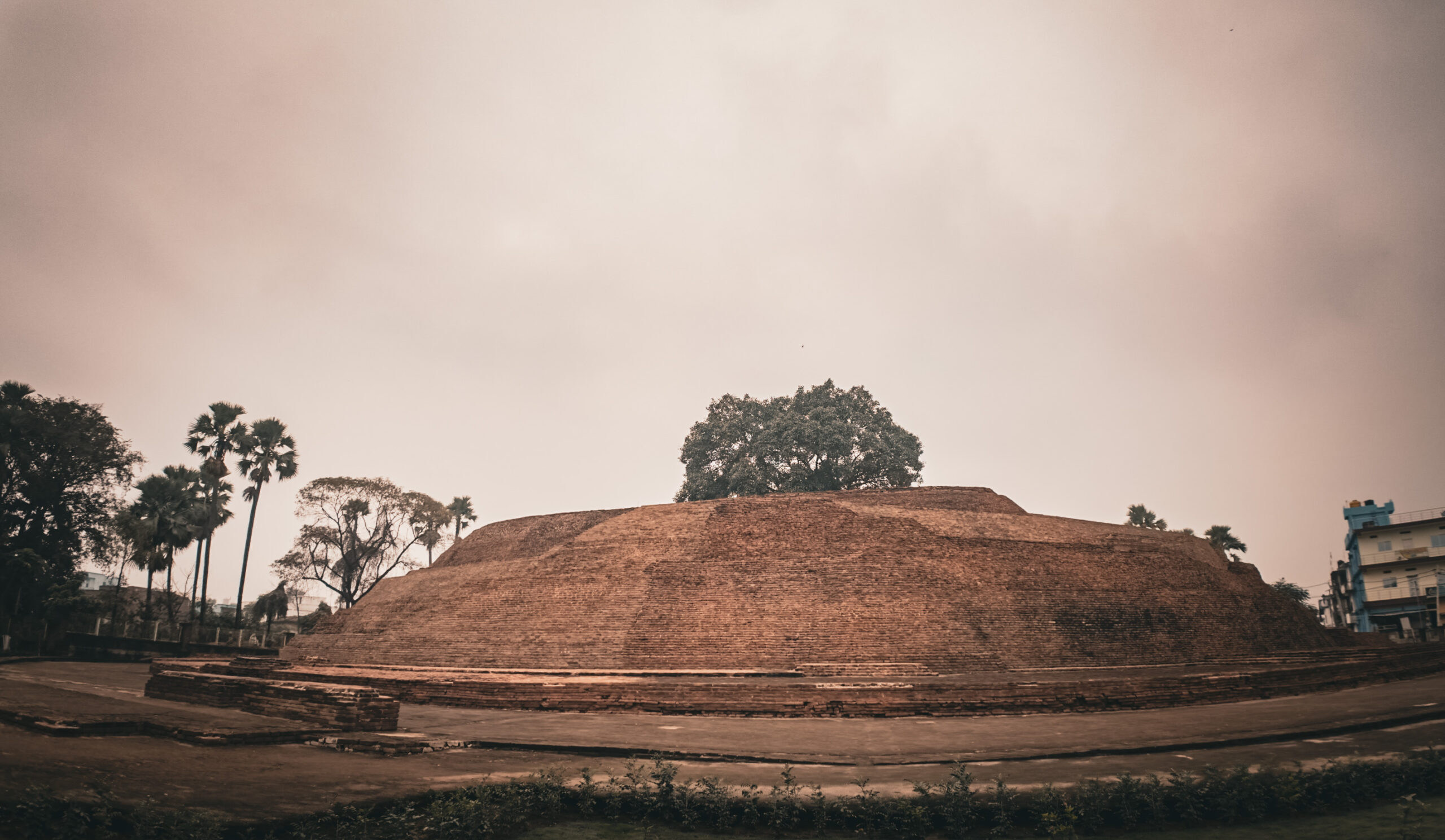
NIRANJANA: Across the river from the gold of Bodh Gaya lies the ancient brick mound where the path to awakening was saved by a single act of kindness.
The Sujata Stupa stands as a silent monument to the moment compassion saved the life of The Buddha in Bodh Gaya.
In the last post, we left Siddhartha Gautama dying in the mud. He had just dragged himself out of the Dungeshwari Cave. He was a skeleton. He was failing. If the story ended there: Siddhartha would have been just another forgotten ascetic who starved to death in the Indian jungle.
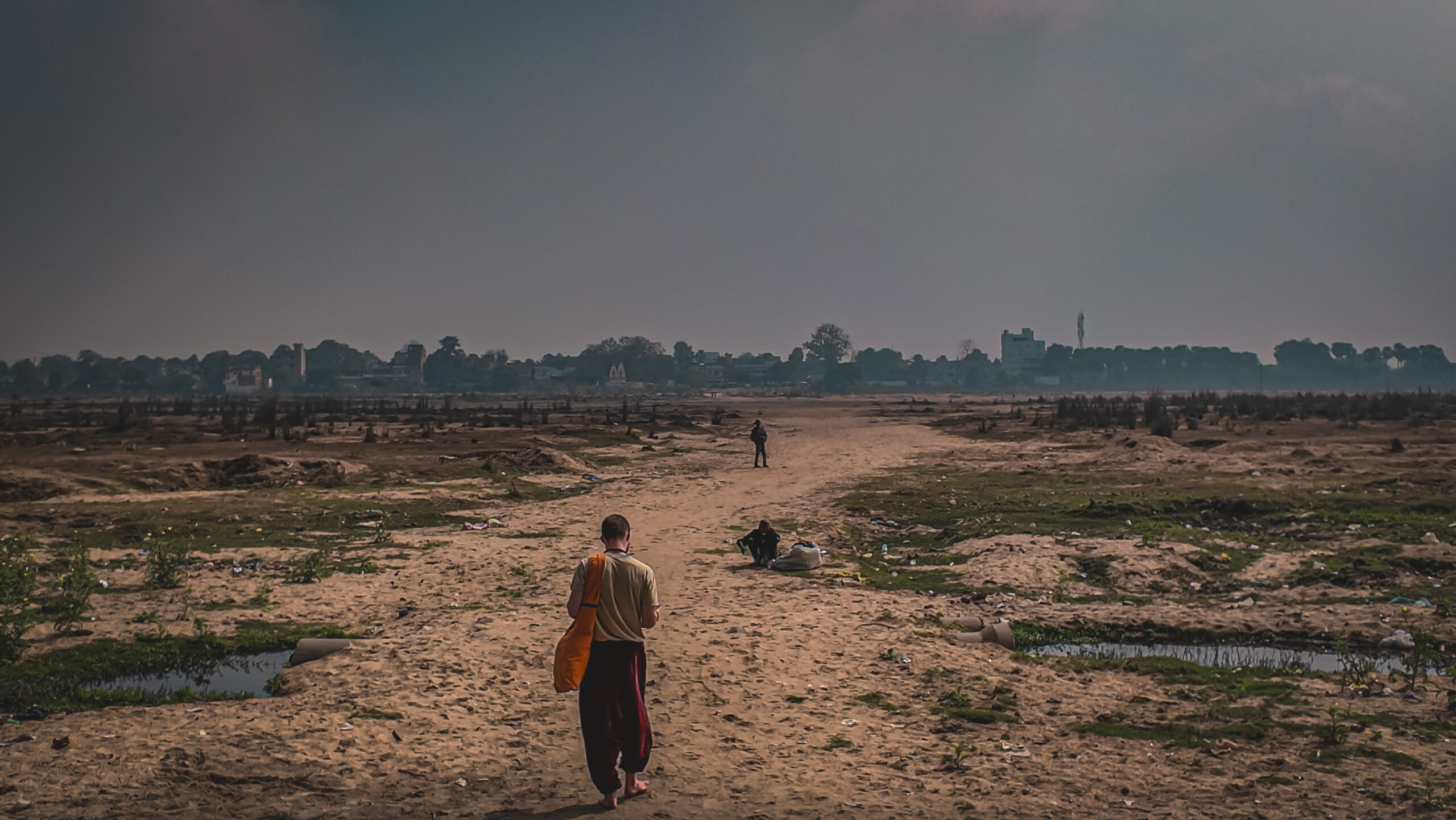
But the story did not end there. It pivoted on a single, simple act of kindness. I traveled across the Niranjana River from Bodh Gaya to visit a massive brick mound that marks the exact spot of this pivot. This is the Sujata Stupa. It is not as famous as the Mahabodhi Temple. It does not have the gold. But without this place: there is no Buddha.
I came here to ask: In a spiritual world obsessed with “transcending” the body, what happens when we finally decide to honor it?
Part 1: The Collapse (The Riverbank)
Siddhartha had collapsed under a Banyan tree. He was too weak to meditate. He was too weak to even stand. The “War on the Body” had been lost. In this moment: ideology crashed into reality. He realized that pain is not the same as truth. He needed energy. He needed life.
“In that bite, the Ascetic died, and the Human returned.”
Part 2: The Girl Who Saw a Spirit
Enter Sujata. She was a village girl who had come to the forest to thank the Tree Spirit for granting her a wish. When she saw the emaciated Siddhartha sitting in the roots of the tree: glowing with a faint, dying light: she thought he was the Tree Spirit himself.
She offered him what she had: Kheer (Milk Rice). It was rich. It was sweet. It was everything an ascetic was supposed to reject. The Buddha had a choice: reject the food and die “pure,” or eat the food, break his vows, and live. He ate. Kindness, not torture, was the fuel for enlightenment.
Part 3: The Miracle (The Bowl Upstream)
This is the cinematic climax of the story. After eating, Siddhartha felt the strength return to his blood. He walked into the Niranjana River. He placed his bowl on the water and made a vow: “If I am to awake today, let this bowl flow upstream.”
The bowl cut through the current and floated against the river. It was the sign that the laws of nature were about to bend. A bowl of rice steadied the cosmos.
The Birth of the Middle Way
The Betrayal
When the Five Ascetics saw him eating, they were disgusted. They believed he had returned to luxury. They abandoned him: leaving him completely alone at the moment of his greatest breakthrough.
The Middle Way
The path between the extremes of the Palace (Indulgence) and the Cave (Self-Mortification). A psychological system of balance and biological sustainability.
Part 5: The Site Today (Sujata Stupa & Kuti)
When you cross the river from Bodh Gaya, the noise fades. The Sujata village is quiet, rural, and dusty. The Sujata Stupa is a massive, ancient brick mound marking the spot where Sujata lived. It feels ancient and raw: a true archaeological discovery.
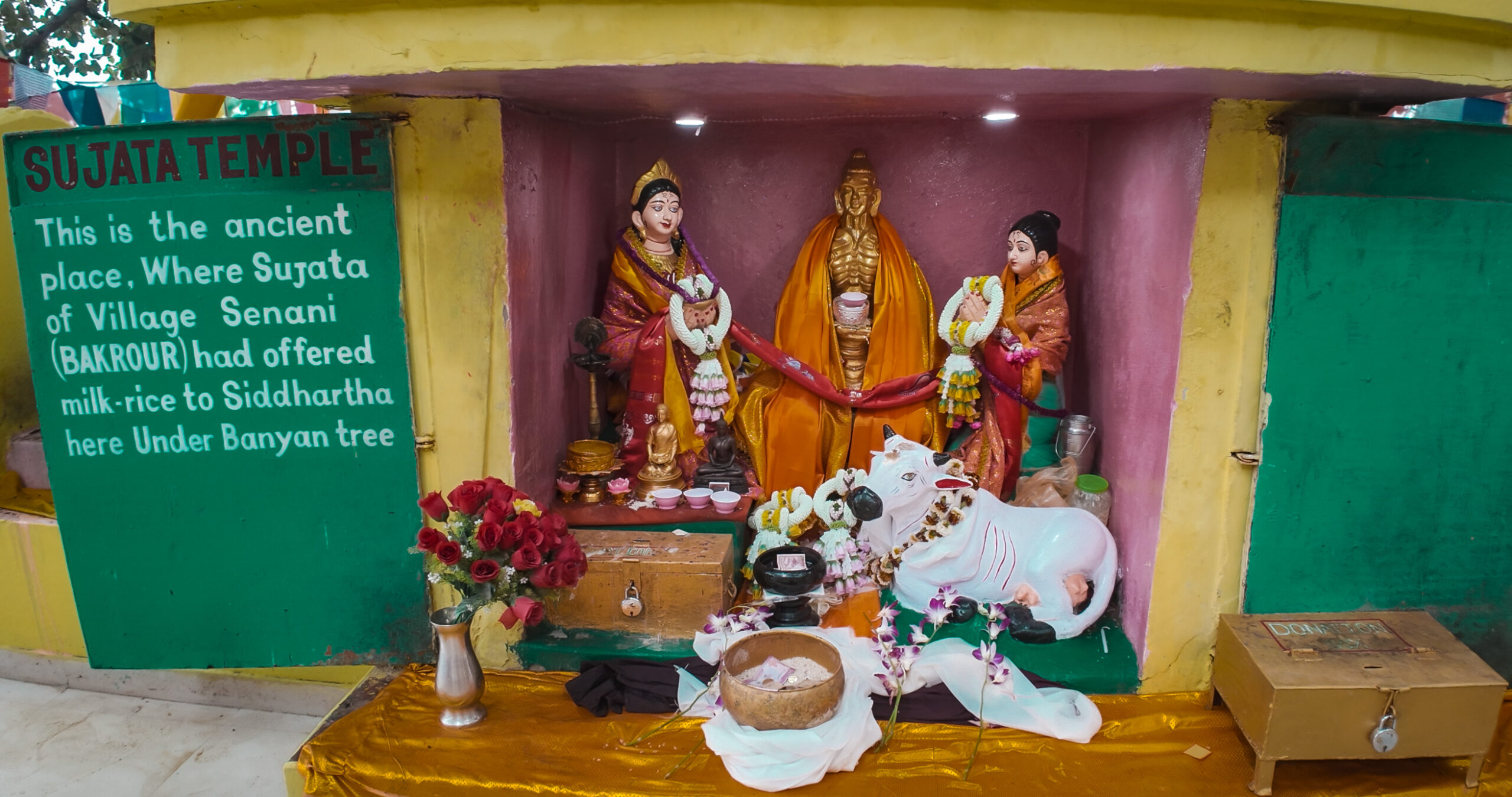
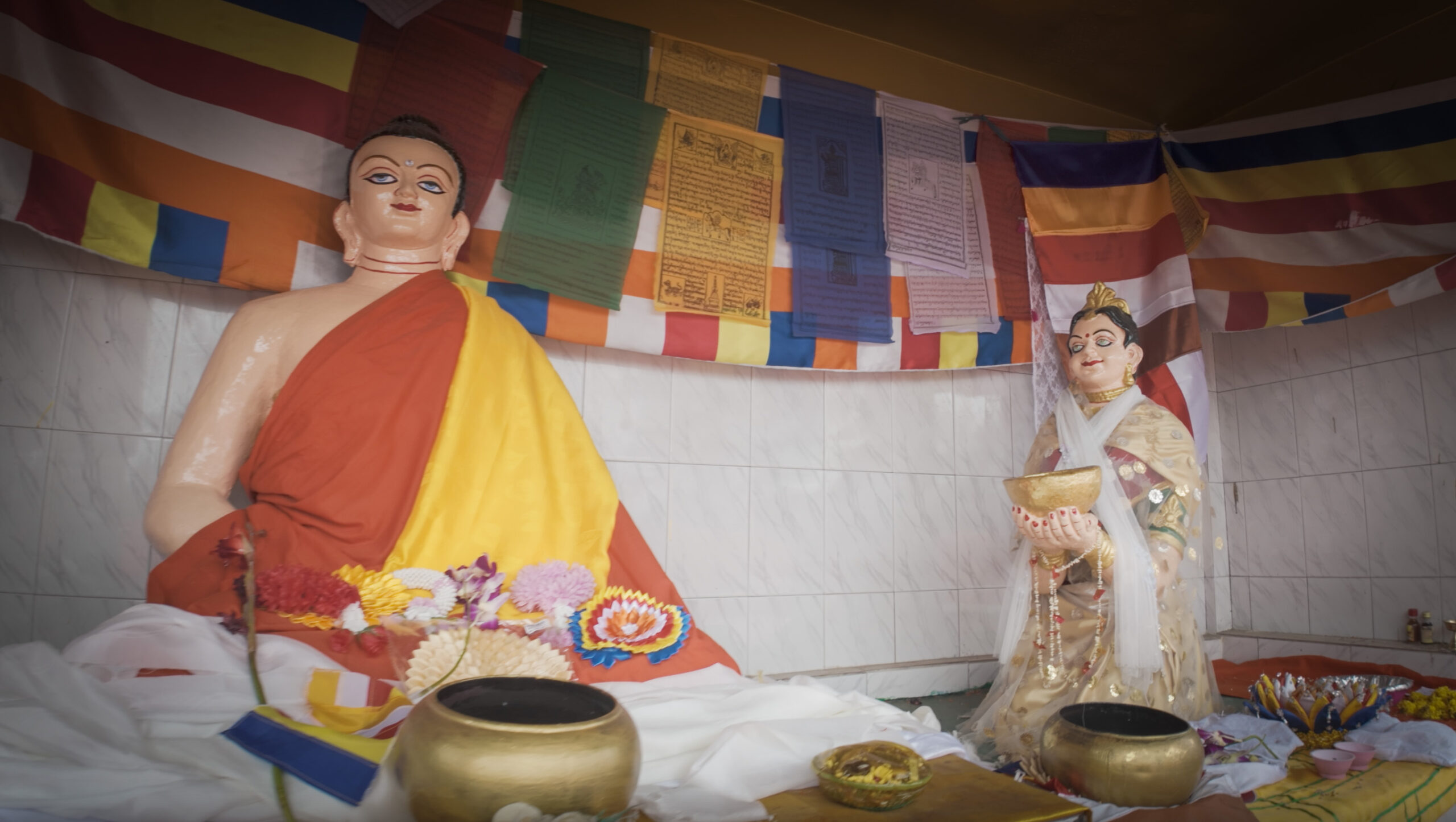
Nearby, the Sujata Temple contains statues of the emaciated Buddha and Sujata offering the bowl. Pilgrims come here to offer Kheer to the statues: a beautiful tradition of feeding the teacher who fed the world.
Part 6: Why This Matters Today
The Sujata Stupa is a reminder that you cannot starve yourself into freedom. Whether it is physical exhaustion or emotional denial: you will collapse. Sujata teaches us that Compassion is the first step to Awakening. And that compassion must start with yourself. You have to eat the rice. You have to fuel the vehicle.
The path is still open. The first step to awakening is deciding to be kind to the one person you often neglect most: yourself.
The Turning Point
The Bowl of Rice That Changed History
Watch the full cinematic meditation on the YouTube Channel.